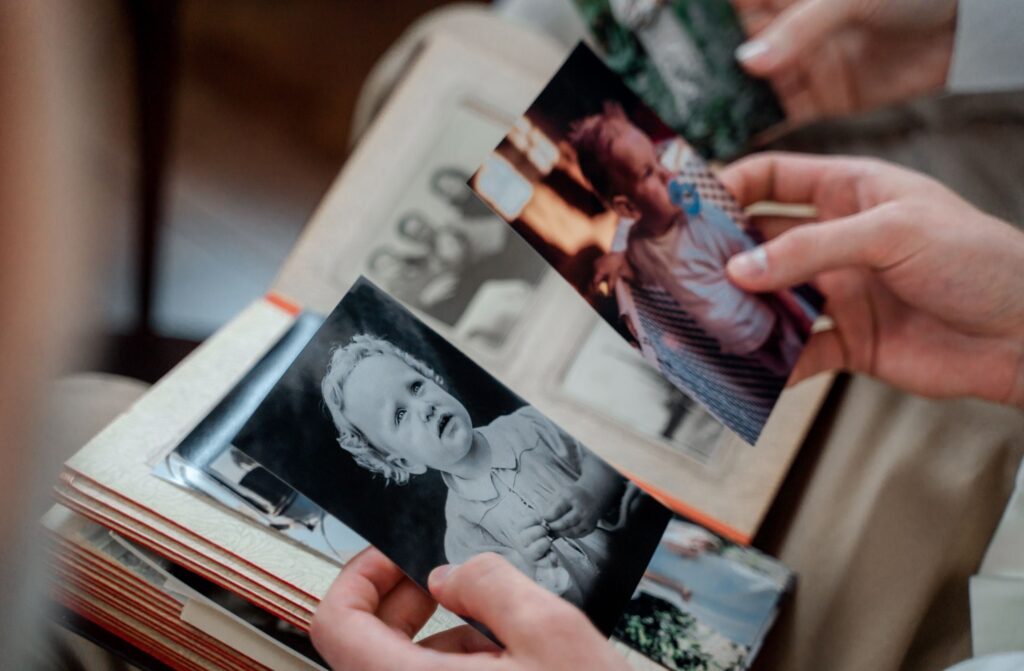
Your brain experiences your representation of the past.
Think about a memory that still carries emotional charge.
The event itself isn’t happening anymore. Yet when you remember it, your body can respond as though something is happening now.
That’s because your brain is working with an internal representation of the experience.
What are submodalities?
In NLP, we call the finer qualities of that representation submodalities.
For example, when you think about a difficult experience:
- Is the image close or far away?
- Large or small?
- Bright or dim?
- Is it moving or still?
- What do you hear? Is the voice loud or quiet, harsh or soft, close or distant?
- And what happens in your body? Is the feeling heavy or light, tight or loose, moving or still?
These distinctions can seem subtle, and they can profoundly influence the way an experience is encoded and recalled.
Try it for yourself
Take a mildly uncomfortable memory and notice how you represent it.
Then experiment with making the picture smaller and further away. Turn down the volume. Change the qualities of the internal voice. Notice what happens to the feeling.
The event is the same. Your experience of it may have changed.
This is one of the fascinating things about the mind: change the way an experience is represented, and you can change the meaning, emotion and impact attached to it.
The question to ask yourself today:
How am I representing what happened, and what happens if I change that?
Learn more about submodalities and other incredible techniques for rapid change at our 8-Day NLP Practitioner Training. Find out more here.